

News
by Berit Krondorf (comments: 0)
Power to the Peatlands 2026
Towards stronger collaboration, from biodiversity to business
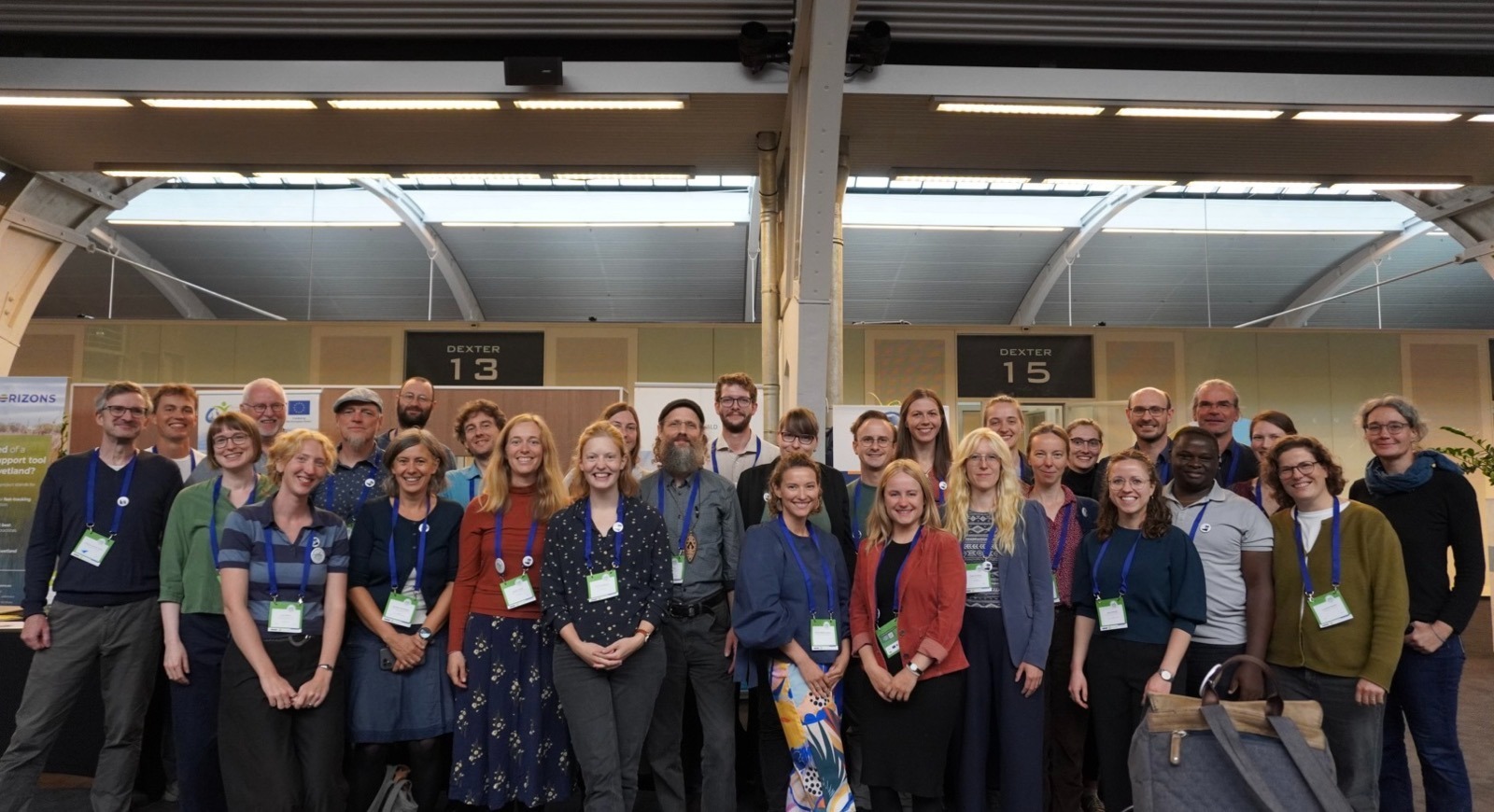
04/11/2026 At the beginning of September, the Power to the Peatlands (P2P) conference brought together more than 700 participants from science, politics and practice in ’s-Hertogenbosch, the Netherlands. Europe’s peatland community came together to discuss how peatland conservation, restoration and sustainable management can be further advanced.
The Greifswald Mire Centre was represented by a large delegation, leading and contributing to various sessions. Topics included the importance of peatland biodiversity in addressing the climate and biodiversity crises, highlighted in Franziska Tanneberger’s keynote, as well as the economic potential of wet peatlands and paludiculture value chains. The latter was explored in the session Peatlands for Business, co-organised by GMC partner Michael Succow Foundation.
Some more GMC highlights from the sessions:
Rewetting requires a landscape perspective
The WETSCAPES2.0 session highlighted why peatland rewetting cannot take place in isolation: Drainage affects water, nutrients, and carbon well beyond peatland boundaries. Understanding and restoring gradients is therefore essential for successful rewetting.
Solar power on rewetted peatland: getting the conditions right
The MoorPower session explored innovative photovoltaic (PV) solutions for rewetted peatlands. Water level management and biomass removal are important considerations, while the cooling effects of wet conditions may even improve PV efficiency. The challenge is to find the right balance between suitable water levels and successful solar energy production.
From landscape-scale restoration to local collaboration and innovative land use, the discussions showed that progress depends on connecting research, practice and policy.
Bog restoration works best when science and practice work together
Examples from bog restoration in Europe showed how landscape walks and dialogue with farmers, authorities, municipalities and water boards can help build mutual understanding and develop solutions for peatlands and paludiculture. Long-term relationships, trust, and continuous feedback between research and practice are key to learning and improving restoration over time.
Finally, a major milestone was the official launch of the European Peatlands Initiative (EPI). EPI brings together governments, the European Commission and stakeholders across Europe to strengthen knowledge exchange, support evidence-based policy making and turn shared ambitions into coordinated action.
Did you miss P2P 2026, or are you keen to revisit a session? The recordings are now available here!