

News/All pieces
by Berit Krondorf (comments: 0)
Experience MoorPower

Peatland PV at Energy Day MV
14/04/2026 How can climate protection, renewable energy and regional economic growth on peatlands be effectively combined? The MoorPower project will provide answers at the EnergieTag MV, right on site. On 25 April 2026, from 11:00 to 14:00, researchers from University of Greifswald, partner in the Greifswald Mire Centre, invite you to an information event in a peatland near Rostock. The meeting point is Bio-Rind Wellen GmbH in Spoitgendorf (near Plaaz, A19).
A planned peatland photovoltaic plant will be presented on site, which combines solar energy with rewetting, thereby delivering a double climate benefit. The MoorPower project is investigating the technical, ecological and socio-economic effects of this approach over a three-year period. Weatherproof clothing and rubber boots or sturdy footwear are recommended for walking on the site. Further information about the event can be found here: https://www.energietag-mv.de/aktion/wie-sich-klimaschutz-erneuerbare-energien-und-regionale-wertschoepfung-verbinden-lassen-informationsveranstaltung-zu-moor-pv/
by Berit Krondorf (comments: 0)
Just dropped:
Paludiculture Newsletter 1|2026
14/04/2026 Here are the latest topics in the latest issue of the Paludiculture Newsletter:
-
Paludiculture projects – who is doing what where in Germany? A study has compiled 146 projects from the past 25 years to provide an overview
-
Water buffalo for peatlands – 70 interested participants gathered at a workshop on water buffalo husbandry on wetland areas in Brandenburg
-
Towering insights for paludiculture – Dr. Christian Brümmer explains why there will soon be many more greenhouse gas measurements on wetlands in our interview
-
Until 2045 – what should peatland climate protection look like until and after Germany’s target year for climate neutrality? A workshop report
Plus more topics and current dates in the event calendar.
We enjoy staying in touch with our readers. What topics would you like to see covered in the paludiculture newsletter? What feedback do you have for us? Feel free to email us at communication@greifswaldmoor.de.
by Berit Krondorf (comments: 0)
A Year in Peatlands
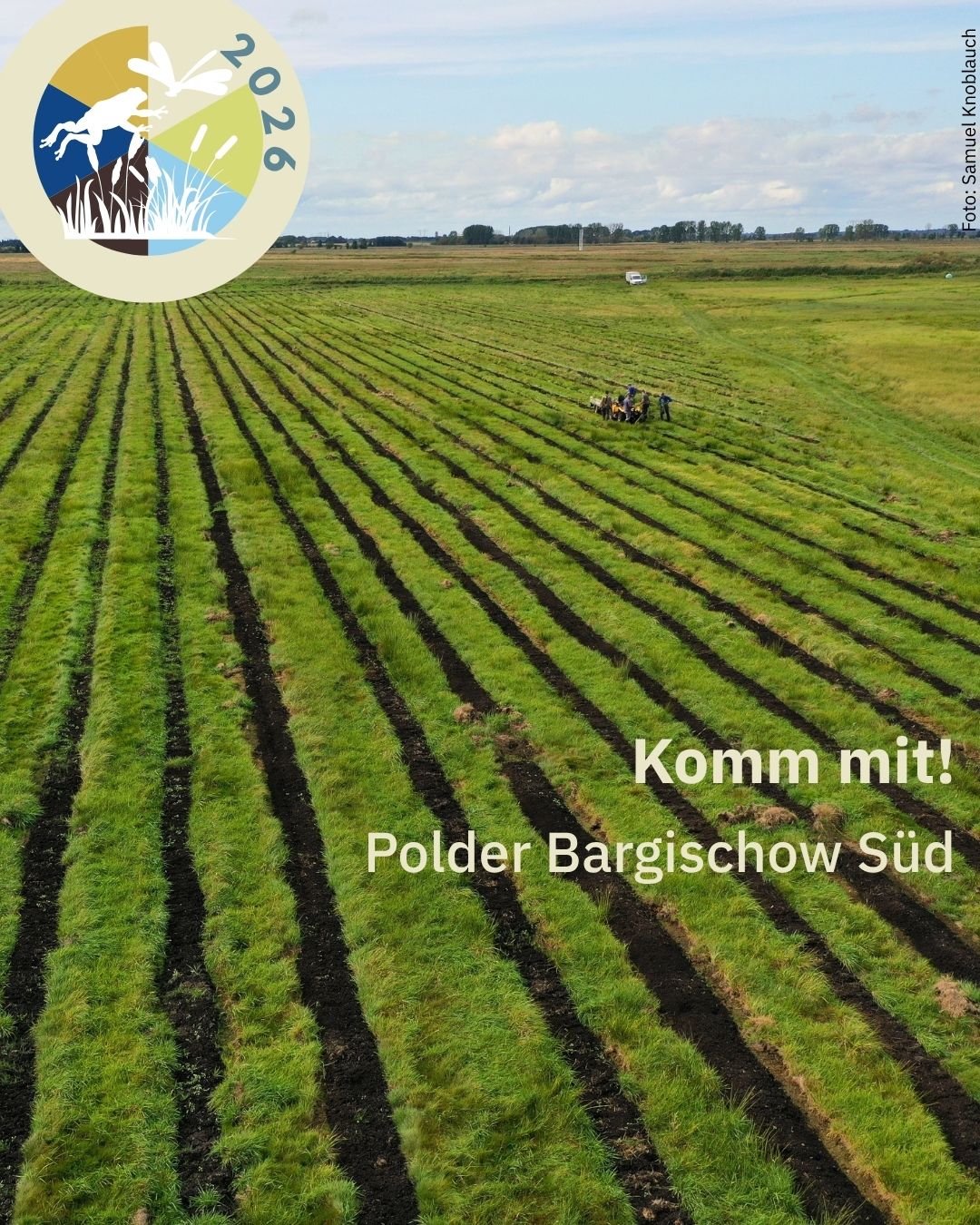
Excursion to the Bargischow Polderser
11/04/2026 The ‘A Year in Peatlands’ excursion series explores different peatland sites each month – ranging from near-natural areas to those under active use, as well as degraded and rewetted sites. On-site experts provide insights into biodiversity, land-use history, climate protection and restoration.
The next excursion takes place on 25th April 2026 from 10:00 to 12:30 at the Bargischow South Polder. The meeting point is at the pumping station in Bargischow. The route covers approximately four kilometres on foot along roads and gravel paths.
On site, the wet management of a rewetted fen with active water management will be presented. The aim is to demonstrate that site-specific use of peatlands is compatible with the requirements of bird, nature and climate protection and can also be implemented on a large scale.
The excursion will be led by Anke Nordt (University of Greifswald). Participation is free of charge and open to all interested parties. Weatherproof clothing and sturdy footwear are recommended.
Further information is available online: A Year in Peatlands
by Berit Krondorf (comments: 0)
Peatlands in British Columbia
Carbon Giants hidden below Rainforests
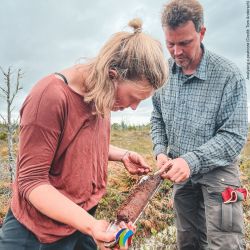
10/04/2026 Old-growth rainforests are famous for their massive carbon stocks – but what about the peatlands hidden within these rainforest ecosystems? A new study by researchers from the Greifswald Moor Centrum now provides valuable insights from the peatlands of the temperate rainforests of Canada’s Pacific coast.
As part of an expedition, Hanna Rae Martens and Jürgen Kreyling, together with the organization Wilderness International, investigated protected areas in British Columbia. The aim was to analyse the distribution of peatlands and their contribution to carbon storage within these rainforest landscapes.
The newly published results show that although peatlands cover only around five percent of the studied region – likely an underestimate – they store about 20 percent of the total carbon in these ecosystems. This means they make a disproportionately large contribution to climate mitigation.
The study highlights the importance of these previously overlooked ecosystems and opens up new perspectives for research and conservation. Further studies will aim to better quantify the carbon storage potential of these peatlands.
The publication is available at: DOI 10.1038/s41598-026-44791-z
by Berit Krondorf (comments: 0)
Paludiculture – who, what, where?
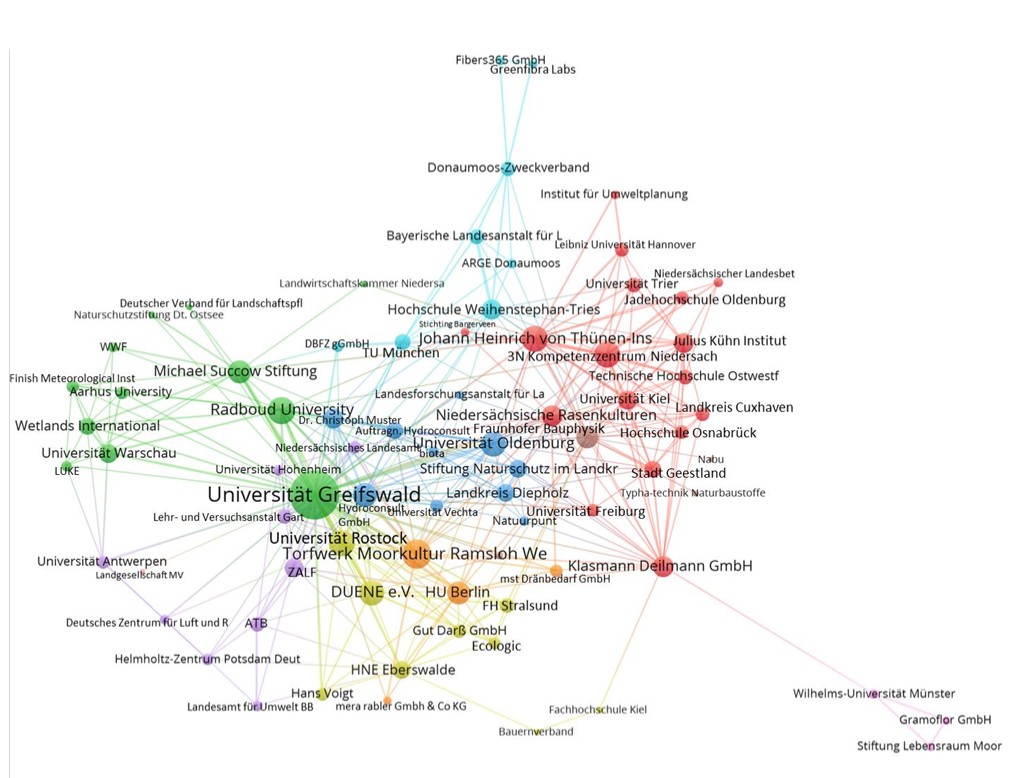
New study analyses 146 projects in Germany
27/03/2026 The new GMC paper ‘The Development of the Paludiculture Project Landscape – An Overview and Analysis in Germany’ (German only) shows: Of the total of 146 projects examined from the past 25 years, the first initiatives began as early as the 1990s – even before the term ‘paludiculture’ was coined in 1998. However, more than 75% of all projects have been implemented within the last ten years, which underlines the growing importance of the topic.
Most projects are located in the federal states with extensive peatlands. Mecklenburg-Western Pomerania (44 projects) and Lower Saxony (41 projects) top the list. The range of topics is broad: particularly between 1995 and 2010, the focus was on crop production and utilisation. Business management aspects were mostly examined as a secondary consideration, whilst issues relating to planning and approval have so far been under-represented.
Many projects concentrate on specific land-use and utilisation options – such as sphagnum moss and cattails for substrate production, or cattails and reeds as building materials. At the same time, there are numerous projects dealing with a wide range of potential uses.
Many projects focus on specific land-use and utilization options — such as sphagnum moss and cattails for substrate production, or cattails and reeds as building materials. At the same time, there are numerous projects that explore a wide range of potential uses.
In addition to the publication in the GMC series, the complete list of 146 projects is available for download as an open Excel file for further work. Interested parties can also contact the authors with suggestions for further projects.
by Berit Krondorf (comments: 0)
Brand new: PaludiBörse online
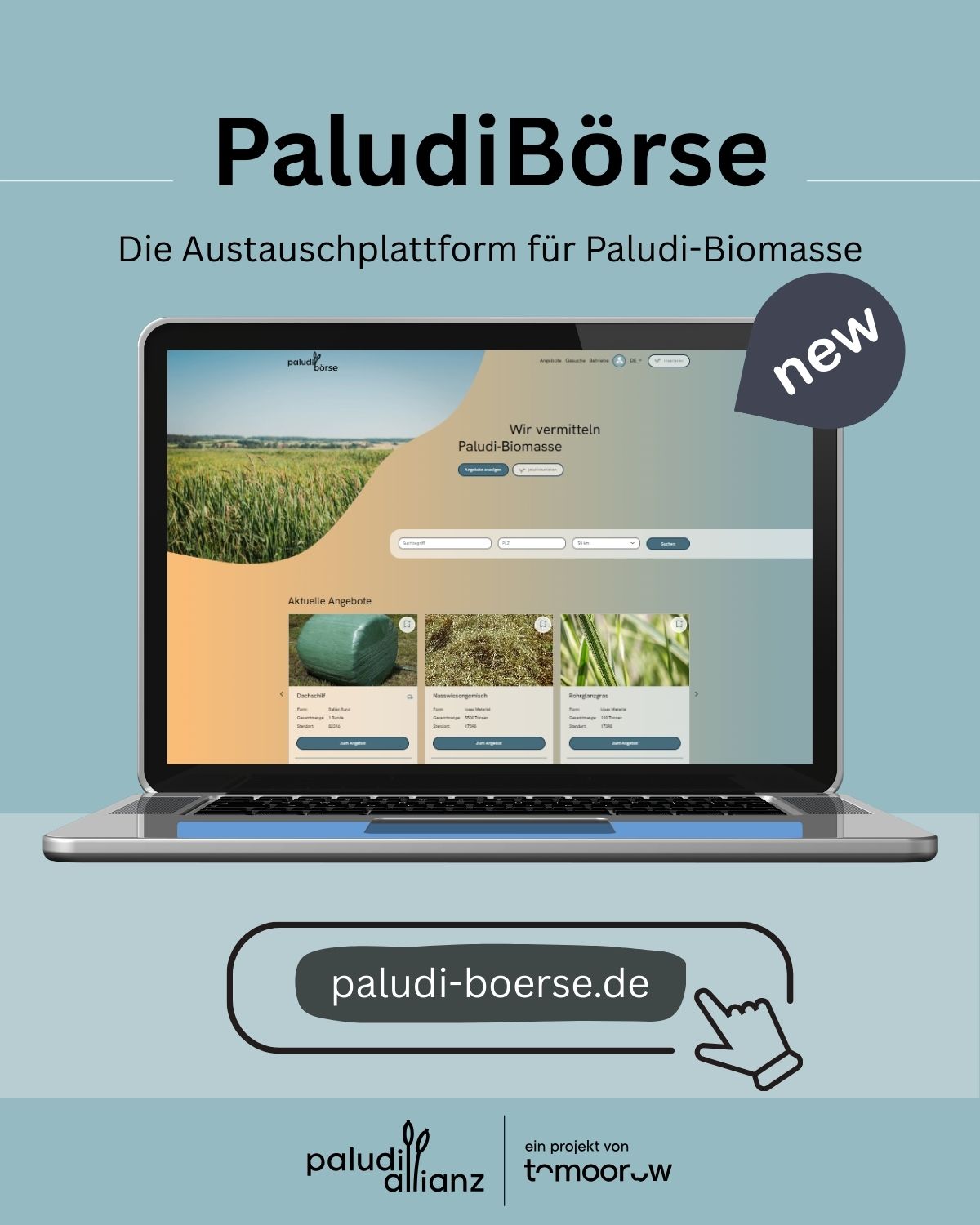
Search for and find biomass easily
11/03/2025 The new online platform PaludiBörse connects the supply and demand side for biomass from paludiculture. It creates transparency about available raw materials, requirements and regional potential for both sides.
The sustainable use of biomass from rewetted peatlands – i.e. paludiculture – plays a central role in climate and biodiversity protection. At the same time, it is difficult to find suitable partners for marketing or processing in practice. PaludiBörse, created as part of the toMOORow initiative and the PaludiAllianz joint project, helps to close this gap.
Farmers can showcase their available raw materials, while companies can search for specific qualities. The platform facilitates networking, reduces search effort, creates market transparency and facilitates the establishment of regional supply chains. This is a step towards making the wet use of peatlands economically viable and contributing to climate and biodiversity protection.
by Berit Krondorf (comments: 0)
Leidissoo mire in Estonia
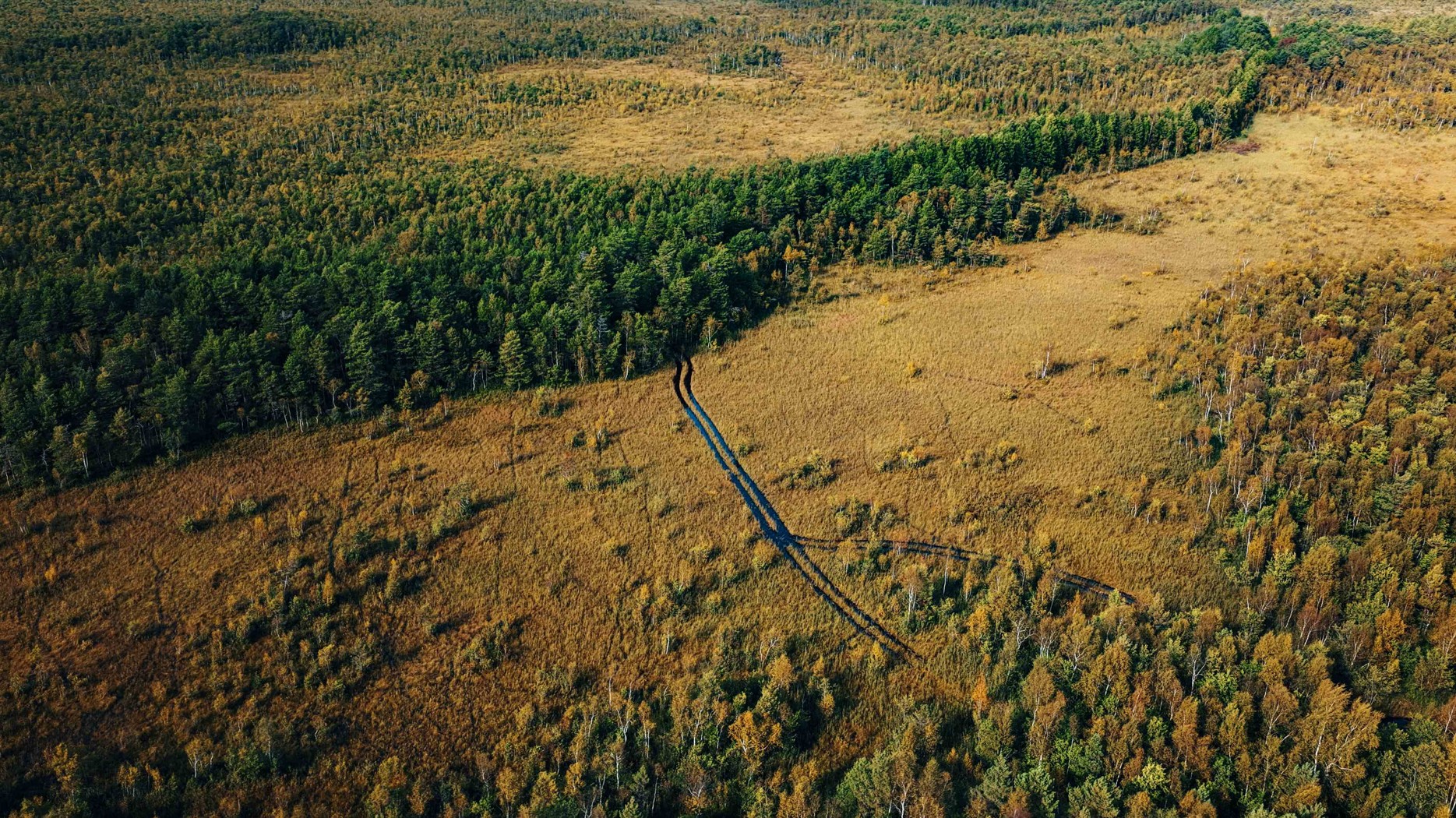
Wet again!
18/02/2026 In December 2025, the final stages of the rewetting of drained parts of the Leidissoo mire complex in north-western Estonia were successfully completed. A film ( United for Peatland Protection: Restoration of Estonia’s Leidissoo Peatland) provides insights into the implementation of the project.
The project, which was launched in 2022, entered the implementation phase in spring 2025 after a comprehensive planning and approval. The restoration measures included closing around 100 kilometres of drainage ditches by constructing more than 500 dams. The aim of the measures is to restore the peatlands natural water balance and thus secure the ecological functions of the ecosystem in the long term, including the positive impact on global climate. Even during implementation on an area of over 800 hectares, initial successes were immediately visible, aided by an exceptionally wet summer.
What happens next?
In spring 2026, after the snow has melted and the spring floods have subsided, the Estonian Forest Management Centre (RMK) will make an initial assessment of the success of the rewetting. This will be followed by long-term monitoring to systematically record the hydrological and ecological development of the rewetted areas.
The Leidissoo mire is situated in a designated nature reserve and plays a central role in the conservation of near-natural mire ecosystems. The rewetting makes a significant contribution to climate change mitigation by reducing CO₂ emissions from drained peat soils.
The protected area comprises three mire complexes – Leidissoo, Sendrisoo and Musa – and combines all types of mires typical for western Estonia: fens, transition mires and raised bogs. It is rich in species and provides a habitat for rare bird and plant species such as golden eagles, white-tailed eagles, capercaillies, bog orchids, heath sedge, and brown beak sedge. Its special value lies in the size of the area and the richness of its bog and forest habitats.
This exemplary project shows that privately funded climate protection projects – such as this one by the Succow Foundation, partner in the Greifswald Mire Centre, PlanBe, HIT Environmental Foundation and RMK – can also make an important contribution to the restoration of ecosystems and achieving European climate protection goals.
by Berit Krondorf (comments: 0)
Paludiculture – how to?
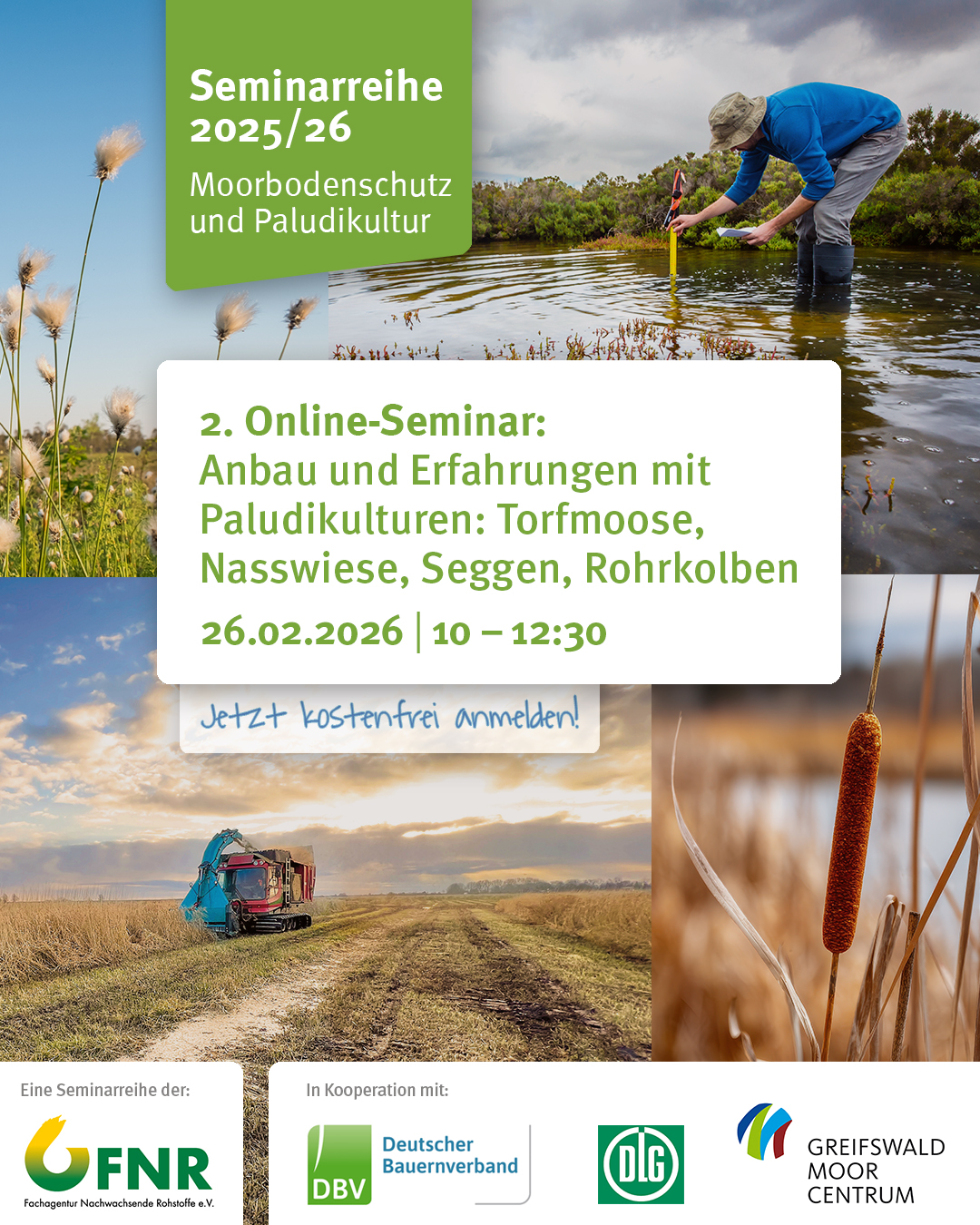
Online seminar on cultivation and harvesting
14/02/2026 On 26 February 2026, FNR and Greifswald Mire Centre will be offering another webinar in the free online series ‘Peatland Protection and Paludiculture’. From 10 a.m. to 12.30 p.m., the focus will be on ‘Cultivation and experiences with paludiculture: peat mosses, wet meadows, sedges, cattails’
Content:
-
Cultivation of various paludicultures: e.g. peat mosses, wet meadow biomass
-
Technology, maintenance, harvesting – practical examples
-
Water control, mechanical cultivation, establishment
-
Processing of paludiculture biomass (e.g. MoorFasern)
Also included:
-
‘Sphagnum moss paludiculture: experiences from 20 years of research, development and practice’
Dr Greta Gaudig, University of Greifswald, MOOSland project coordinator -
‘Combined climate protection: land use for MoorFasern – MooReturn project’
Ludwig Bork, farmer and managing director of Agrotherm GmbH - ‘Experience gained from 20 years of wet cultivation’
Frank Havemeyer, Managing Director of Niedersächsisches Landvolk Kreisverband Osterholz e.V.
Special features
-
Interactive format with room for dialogue and discussion
-
Goal: exchange, knowledge transfer and cross-sector cooperation
-
Invitation to participants to contribute their own expertise and gain new perspectives
by Berit Krondorf (comments: 0)
World Wetland Day
A Year in Peatlands
2 February 2026 To mark International Wetlands Day on 2 February, the Greifswald Moor Centre is announcing a new series of events: ‘A Year in Peatlands’. Every month, an excursion will give interested parties the opportunity to explore the diverse peatland landscape in and around Greifswald and in Vorpommern.
In summer, participants can experience individual topics such as biodiversity, history of use and paludiculture in the field. In the winter months, participants can keep warm while working or sit in the cosy peatland library.
Here are the upcoming dates:
On 7 February, it's time to get stuck in at Mannhagen Moor. Together, we will clear young trees from the peatland to protect rare species. Hot soup will be provided during the lunch break.
On 16 March, the excursion will take us to the ‘treasure on the coast’, the Drammendorf polder on Rügen, with lots of information about renaturation and current research in this coastal peatland.
On 25 April, we will see whether peatland protection and use can be combined. The Bargischow Süd polder is being converted to wet cultivation (paludiculture).
On 9 May, we will experience the sound of a coastal flood peatland while observing breeding birds on the Karrendorfer Wiesen. In addition to fascinating bird calls, participants will learn all about the history of use and nature conservation measures in the area.
Whether natural, utilised, degraded or rewetted – the excursions take place in areas with very different conditions and functions. They are open to anyone interested, are free of charge, but require online registration.
All information here: A Year in Peatlands – Greifswald Moor Centre
Background: World Wetlands Day
Since 1997, World Wetlands Day (WWD) has been held annually on 2 February to raise awareness of the importance of wetlands, including peatlands. On 2 February 1971, the Ramsar Convention, the international agreement on the protection of wetlands, was adopted. Since 2021, it has been recognised as an international day by the United Nations. Pollution, drainage and agriculture, fires and overfishing have threatened or already destroyed wetlands, including peatlands, worldwide. Yet they are guarantors of biodiversity and climate protection. Among other things, they offer people protection against drought and flooding, purify water and regulate the microclimate. In Germany, 95% of the former peatlands have been drained and are no longer recognisable as such today.
by Berit Krondorf (comments: 0)
How does Typha germinate?
New brochure
27/01/2026 Andre Jansen set to find how Typa germinates and what it means for the future of paludiculture – a climate-smart way of farming on rewetted peatlands. Because wet agriculture can help to protect peatlands while still producing valuable biomass!
The result: the brochure "The germination of Typha species" now available online! Based on an extensive literature review, it translates ecological knowledge into practical insights for sustainable land use and restoration.
Five key takeaways:
1️⃣ Typha species produce enormous amounts of viable seeds, making sowing a promising and cost-effective alternative to planting.
2️⃣ Water regime is the key driver: fluctuating water levels strongly influence germination and seedling establishment.
3️⃣ Typha seeds germinate fast and reliably under the right conditions, especially with sufficient light and temperature.
4️⃣ The species’ ability to form persistent seed banks allows rapid colonisation after rewetting events.
5️⃣ Understanding germination ecology is essential for successful paludiculture and peatland conservation.
-> Discover more in the full brochure here